
The post office sold Rudolph on VHS in 1996
The gadgets, toys, music videos and ads of the 70s, 80s and 90s, pictured, every fact traced to its source.
Grew up with VHS?
About 3 minutes this week, 9 pictures.

1996. A VHS tape, $4.99, at 13,800 post offices.[1]
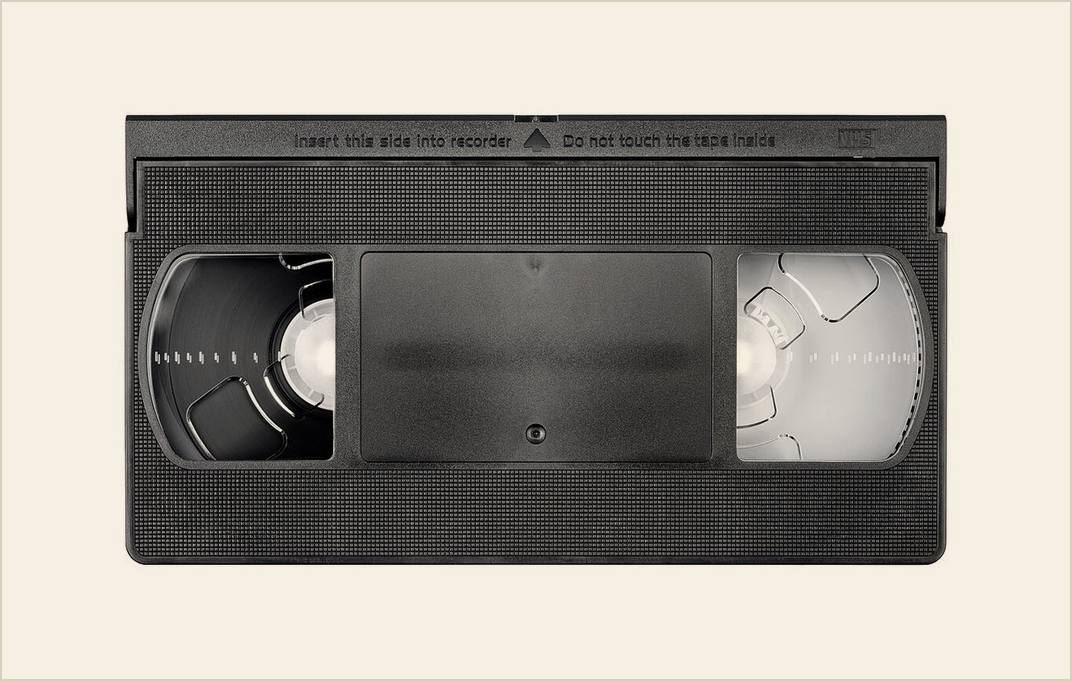
A blank VHS tape, “Do not touch the tape inside” molded on its top. The post office’s ran 24 minutes.
In the Billboard dated November 23, 1996, clerks were selling “The Rudolph, Frosty & Friends Sing Along”, priority mail extra.[1] The Postal Service ordered 3 million, and its spokeswoman called it “a promotion for priority mail”.[1]
1976. The Big Wheel, drawn in the Thanksgiving Day paper.[2]
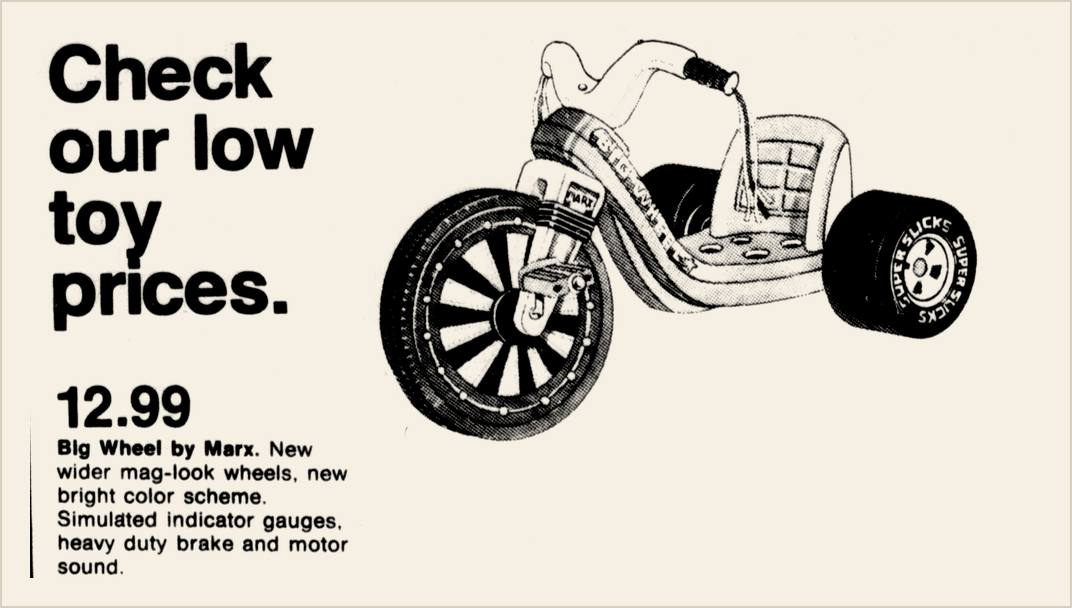
The Big Wheel by Marx, streamers on the grips, “Super Slicks” on the back tire. JCPenney, Pomona, Calif., November 25, 1976.
The page’s line: “Simulated indicator gauges, heavy duty brake and motor sound.”[2] Ardan, in Lincoln, Neb., called it “The big daddy of the trike revolution” the same day.[3]
1986. The Monkees’ “Daydream Believer” clip, and seven Monkees albums on one chart.[4]
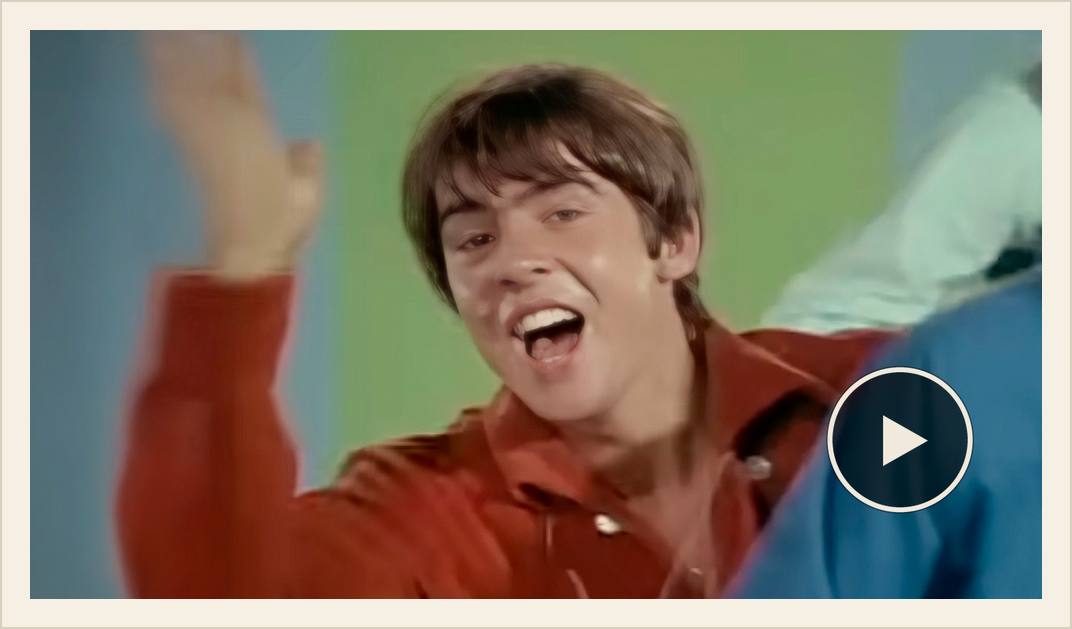
The “Daydream Believer” clip: a red shirt, one hand up, a green wall. A “sneak preview” on MTV’s list, November 22, 1986.
That week’s Billboard had seven Monkees albums on the Top Pop Albums chart.[4] Its YesterHits box had “The Monkees” as the No. 1 album 20 years earlier.[4] Seven wasn’t the record: Led Zeppelin had nine in 1979.[4]

Page 637 of the 1984 Sears Christmas Wish Book.[5] Guess what Sears asked for the ruby red mini boom box. The answer is at the bottom.
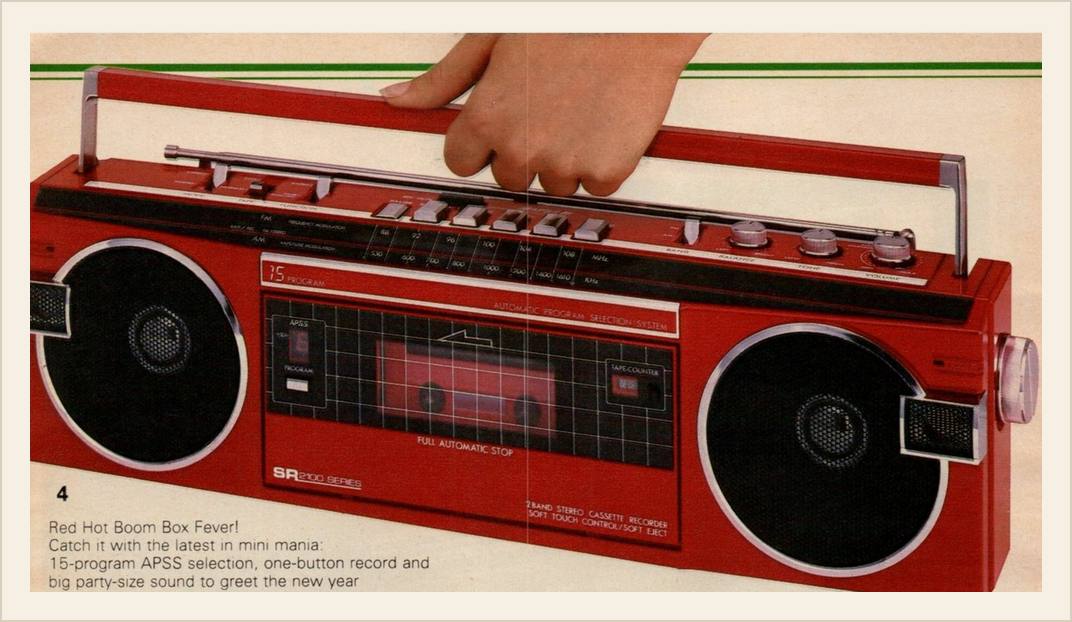
The ruby red mini boom box, a hand on the handle, a red tape behind the door. Page 637.
The page’s headline: “Red Hot Boom Box Fever!”[5] A system it calls APSS could pick out up to 15 songs on a tape, played through two 4-inch woofers.[6]

“Human”, No. 1 on the Hot 100 in the Billboard dated November 22, 1986.[4]

A close-up from the “Human” video: dark hair, drop earrings, red lipstick. The Human League’s second No. 1, after “Don’t You Want Me”, 1982.
Jimmy Jam and Terry Lewis wrote and produced it, their second No. 1 of 1986 after Janet Jackson’s “When I Think Of You”.[4] A reader’s note in Chart Beat made it 1986’s seventh No. 1 with a one-word title, one more than 1982.[4]
Watch it on TheHumanLeagueVEVO.

Corelle in Butterfly Gold, in the 1976 Service Merchandise catalog.[7]
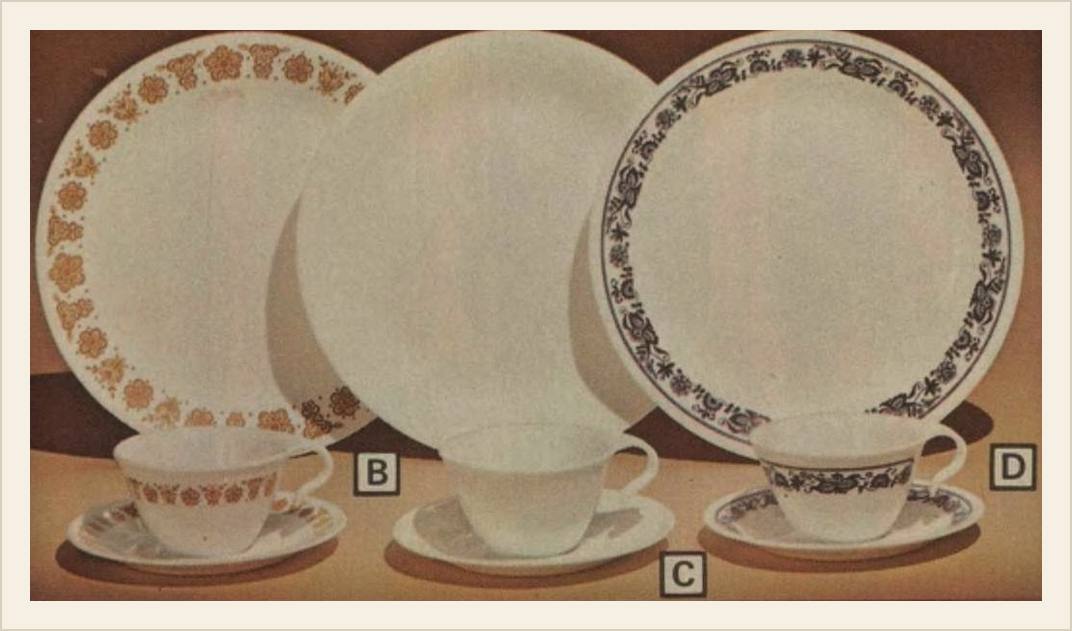
Butterfly Gold on the left, plain Winter Frost White in the middle, Old Town Blue on the right, each with its cup. The page’s line: “Dine on an enchanted garden!” Page 101.
The 20-piece set’s price was in its catalog number: the last four digits, 2386, meant $23.86.[7]
Send this one to whoever dried them: grewupwithit.com/issues/1/butterfly-gold

The Caller ID System 40, on the 1995 Radio Shack page that explains Caller ID.[8]
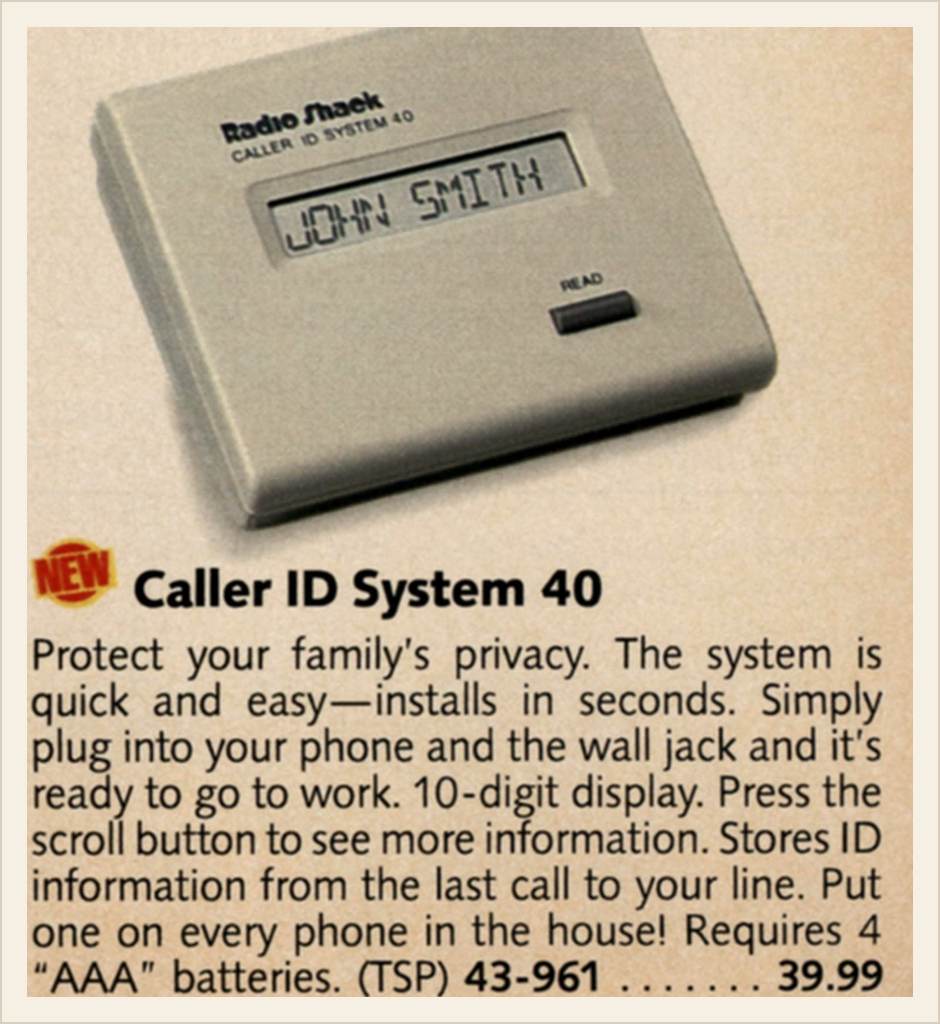
The Caller ID System 40, JOHN SMITH on its display, and its listing. Radio Shack, 1995, page 13.
Next to it on the page, a yellow box asks “What is Caller ID?” and says you needed a Calling Number Delivery subscription from the phone company.[8] The listing wants one on every phone in the house.[8]

Three wire rings from a Woolworth ad, 1975.[9] The stores closed in November 1997.[10]
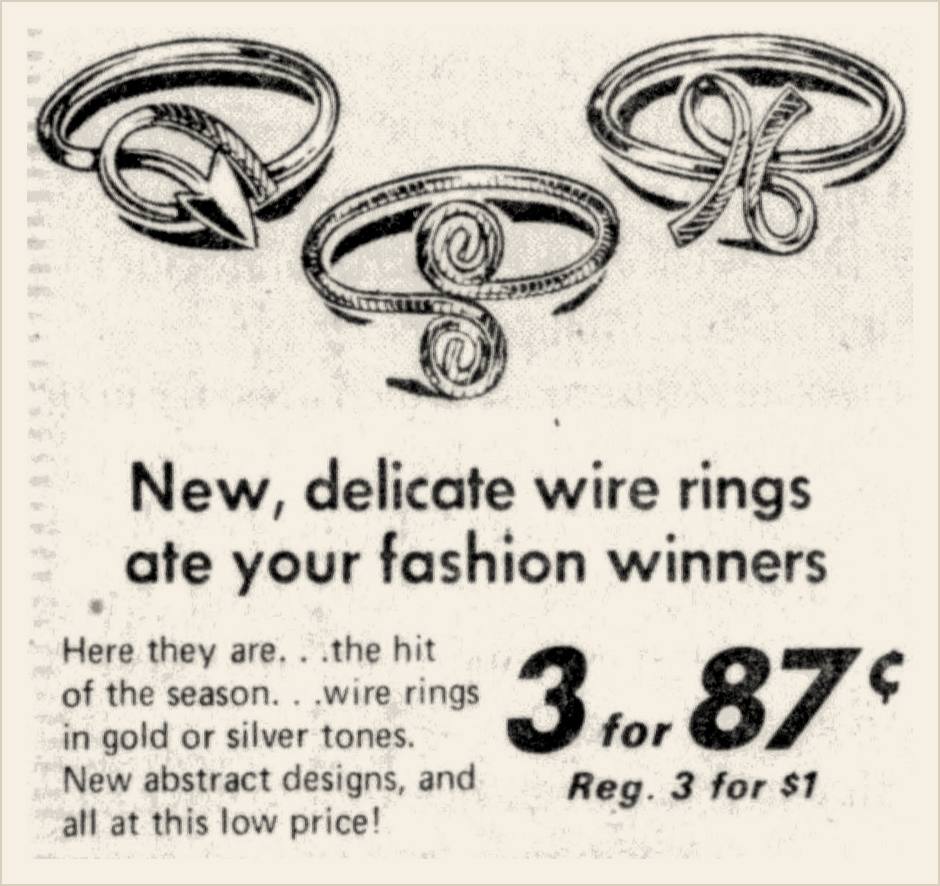
Three wire rings, 3 for 87¢. The headline on the scan: “New, delicate wire rings ate your fashion winners.” January 15, 1975.
Woolworth said on July 17, 1997, it was leaving US general merchandise, 400 stores: about 130 were to become Foot Locker and other formats, and the rest closed that November.[10] AP blamed Wal-Mart and the discounters, and called it a 117-year-old place to buy “a mop, a pet turtle, even a bite to eat”.[11]

Pick one thing in this issue that was in your house: the boom box, the Butterfly Gold plates or the Caller ID box. What became of it? Answer in a sentence. A few of them run next week.
Reply with your answer and your state. We print answers as “a reader in Ohio”; add “use my first name” if you’d like that instead. Privacy: grewupwithit.com/privacy.
Something that was in your house and isn’t in here yet: grewupwithit.com/suggest.

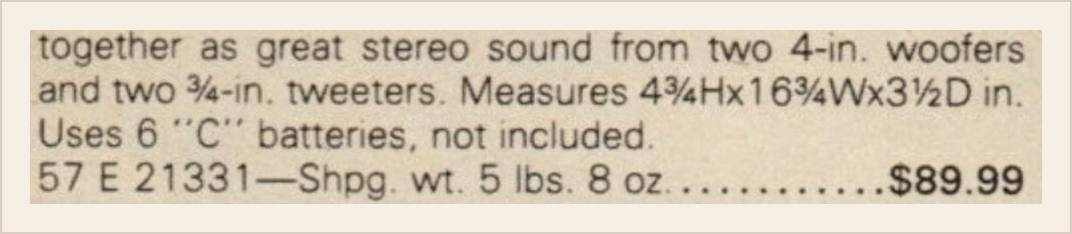
The end of the page’s listing for the mini boom box, page 636. The price is the last thing on it.
$89.99
or 360 quarters with a penny back.[6]
About $292 in September 2026 dollars.[12] The 6 C batteries were not included.[6]

- [1]Billboard, November 23, 1996: the post office tape, p. 6
- [2]Progress Bulletin, Pomona, Calif., November 25, 1976, JCPenney insert p. 10 (Internet Archive leaf n80), the Big Wheel
- [3]Lincoln Journal and Star, Lincoln, Neb., November 25, 1976, Ardan ad (leaf n40)
- [4]Billboard, November 22, 1986: Chart Beat by Paul Grein, p. 6; YesterHits, p. 18; MTV programming list, p. 44; Hot 100 Sales & Airplay, p. 83; Top Pop Albums, pp. 86 and 89
- [5]1984 Sears Christmas Wish Book, printed page 637 (Internet Archive leaf n80), the photo and its headline, read on the scan
- [6]1984 Sears Christmas Wish Book, printed page 636 (Internet Archive leaf n374), the listing and the price, read on the scan
- [7]Service Merchandise Spring and Summer Supplement, 1976, p. 101 (leaf n118), item B; the price code is explained on leaf n2
- [8]1995 Radio Shack catalog, printed p. 13 (leaf n14), read on the scan
- [9]The Mercury, Pottstown, Pa., January 15, 1975, p. 3, Woolworth ad
- [10]Woolworth Corporation, Form 10-Q for the quarter ended October 25, 1997, filed December 8, 1997, Discontinued Operations note
- [11]The Times-News, Twin Falls, Idaho, July 18, 1997, p. D-6 (leaf n28), AP
- [12]Today’s dollars: our calculation from BLS CPI-U, series CUUR0000SA0. 89.99 × 336.940 (September 2026, the latest month) ÷ 103.9 (the 1984 annual average), rounded to whole dollars.
Today’s dollars: our calculation from BLS CPI-U, retrieved November 5, 2026. BLS.gov cannot vouch for the data or analyses derived from these data after the data have been retrieved from BLS.gov.
The numbers in brackets link to the page they came from.
The first real issue
Get it every weekOne click to leave.